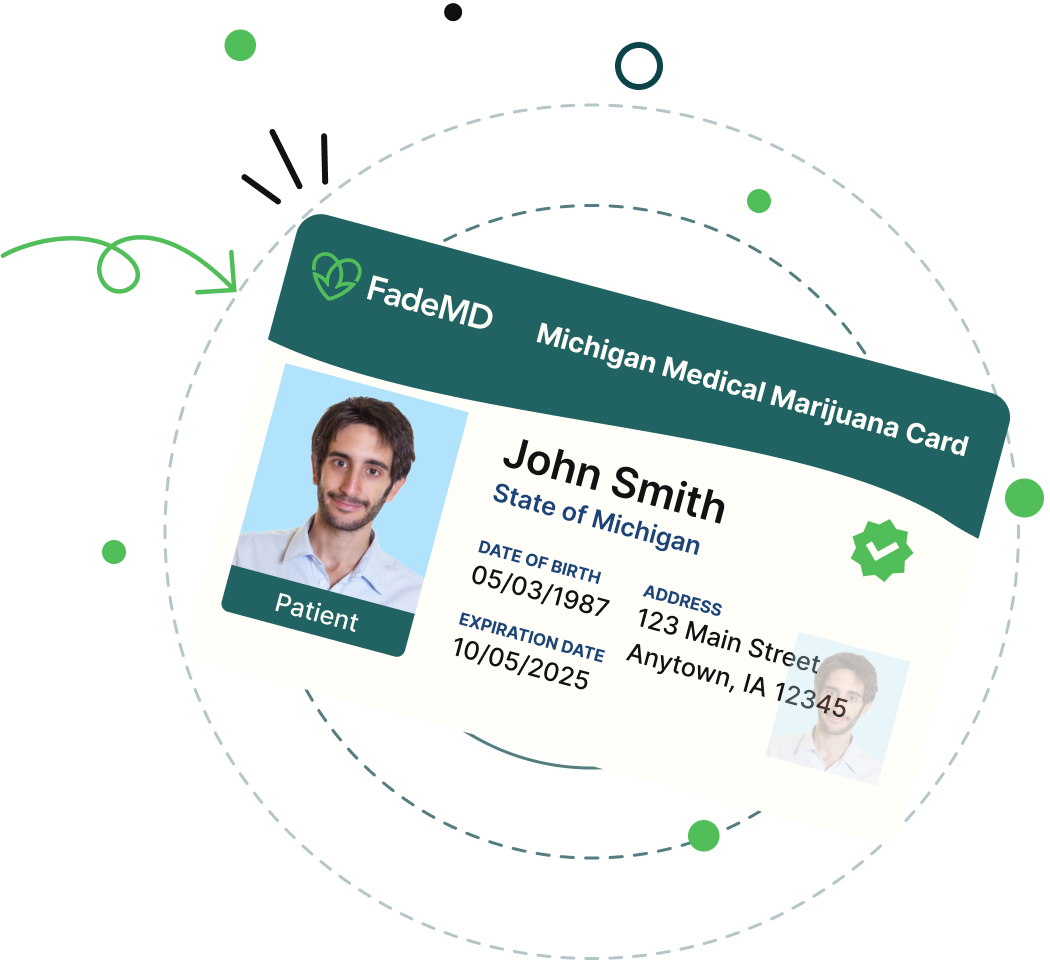



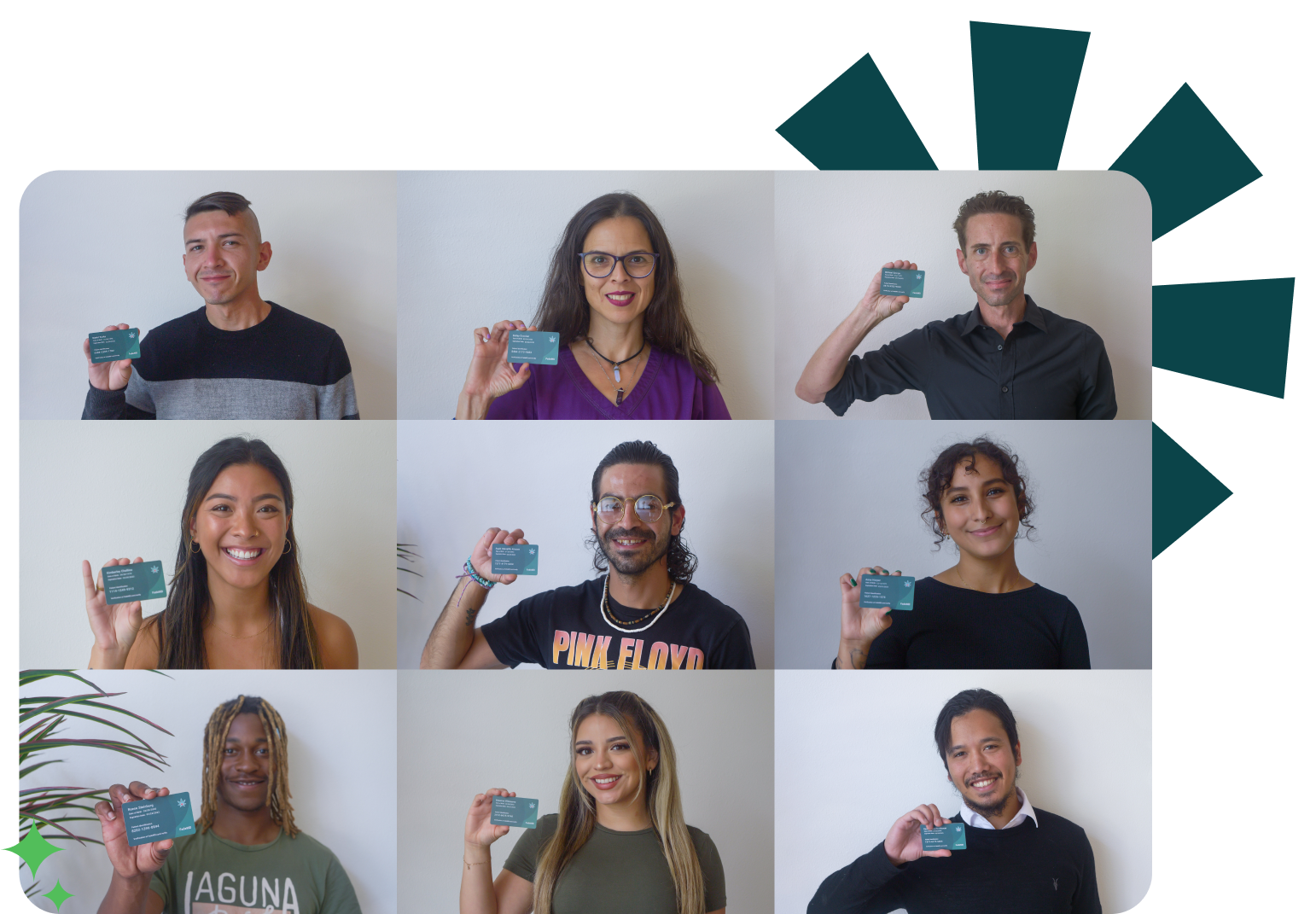
Trusted by 100,000+ patients around the USA









FadeMD simplifies the process of getting a medical marijuana card in your State. Register and speak with a medical professional today.

A licensed medical professionals will review your application and provide a cannabis consultation.

Upon approval, your medical professional will follow State guidelines to certify you for your medical marijuana card.

Receive full dispensary access, renewal reminders, and ongoing treatment options from your provider.


%201.svg)




Medical patients can be 18 years or older for dispensary access.

Medical users have access to better quality and higher strength products.

Save around 10% on medical marijuana taxes in Michigan.

A medical marijuana card offers enhanced legal protections in Michigan.


FadeMD is the leader in matching patients with medical marijuana professionals. Read patient experiences with FadeMD here.

The Michigan Medical Marijuana Program (MMMP) quickly began providing patients with relief following the legalization of prescribed cannabis in 2008 under the 'Michigan Medical Marihuana Act.' In 2019, Michigan also legalized adult-use cannabis, with retail sales starting in December of that year. This dual legalization has significantly boosted state finances, generating millions of dollars from both medical and recreational marijuana sales.
According to the Marijuana Regulatory Agency, Michigan has more than a dozen conditions that qualify residents for a medical marijuana card. See the full list of qualifying conditions in Michigan here. Common medical conditions include:
Michigan also considers “chronic or debilitating disease or medical condition or its treatment that produces 1 or more of the following”:
Along with having one or more of the conditions, a qualifying patient 18 years of age or older that applies for a Michigan medical marijuana card must also prove their residency with a valid driver’s license or state identification card.
Schedule a consultation with a certified physician through FadeMD. Once approved, you can begin the application for the Michigan Medical Marijuana Program (MMMP) with the Marijuana Regulatory Agency.
During the application process, you will need to verify your address and provide proof of Michigan residency by creating an online account. Acceptable proof includes a state driver’s license number, personal identification (PID), or a signed Michigan voter registration. If using voter registration, you must also provide an additional valid government-issued document with your name and birthdate. Additionally, you will need to provide the Michigan physician license number, your physician certification, and pay the $40 state application fee. Patients with Medicaid or receiving SSI are eligible for a reduced card cost of $25 annually.
A primary caregiver must be at least 21 years old and have no felony convictions to assist a patient in the medical cannabis program.
A primary caregiver must prove Michigan residency before applying for a card. Acceptable proof includes a current driver’s license or state identification card; expired forms are not accepted. The caregiver must also be added to the patient’s registration to be eligible.
The cost for a caregiver card is $40, and caregivers are not required to pay for a criminal background check.
To renew your Michigan medical marijuana card through FadeMD, schedule a renewal appointment with our physician. We'll confirm your condition and help you renew. We'll remind you when it's time, or you can contact us for a renewal discount. A Michigan medical marijuana card is valid for up to two years. Caregiver cards expire at the same time as the patient's card.
In Michigan, adults are allowed to possess up to 2.5 ounces of marijuana, including up to 15 grams of marijuana concentrate. Additionally, residents can have up to 10 ounces of cannabis for medical use at home, but any amount over 2.5 ounces must be stored in a container until use.
Michigan now allows citizens to grow marijuana even if they are not medical marijuana cardholders. Adults 21-years-old or older may now legally grow up to 12 plants.
The Justice Department proposed a new rule to reclassify marijuana as a Schedule III drug, which would ease federal restrictions on cannabis if approved. This reclassification would not legalize or decriminalize marijuana nationwide but would place it on the same regulatory level as ketamine and anabolic steroids. Currently, marijuana is classified as a Schedule I drug, meaning it has "no currently accepted medical use and a high potential for abuse." The proposed change would recognize marijuana as having "a moderate to low potential for physical and psychological dependence."
The proposal initiates a months-long comment and administrative period before any changes take effect. This follows President Biden's 2022 request for the Department of Health and Human Services (HHS) and the Justice Department to review marijuana's classification. HHS found credible scientific evidence supporting marijuana's medical use. The notice of proposed rulemaking reflects the attorney general's agreement with HHS's recommendation. President Biden hailed the move as "monumental," emphasizing marijuana policy as a priority of his administration, which has also worked to pardon those convicted of simple possession.


Our customer support team is on standby to help you out.